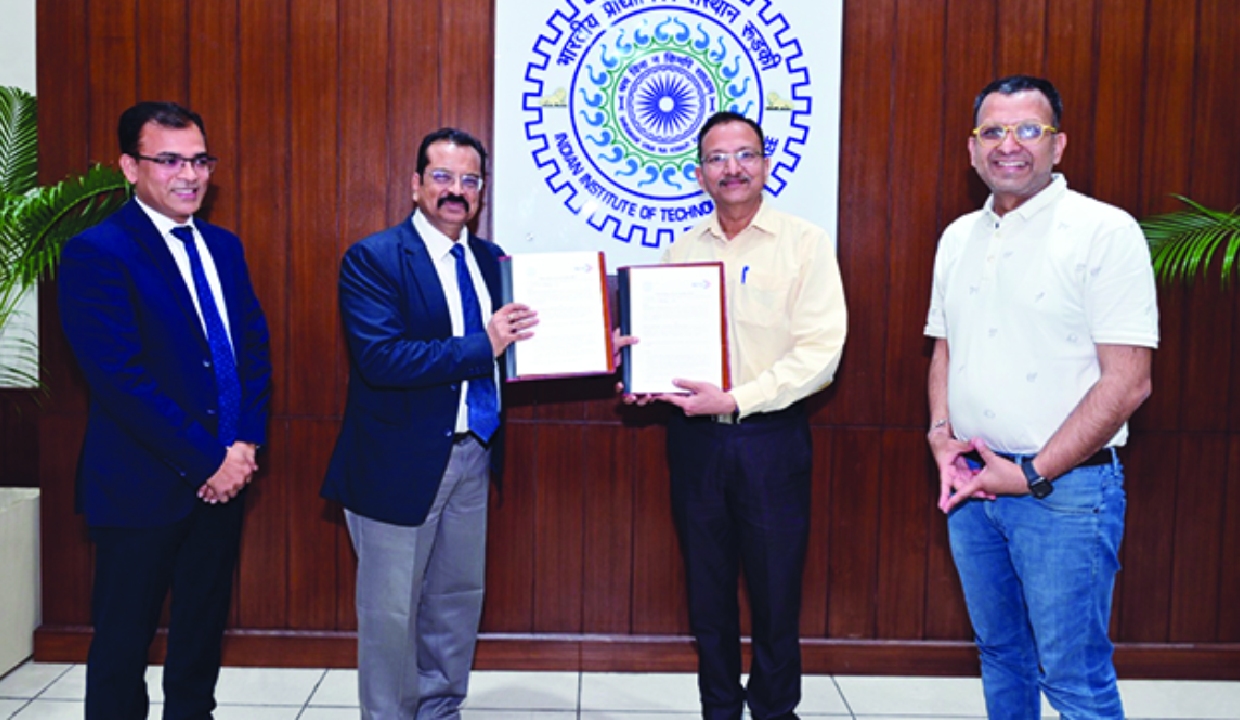
In a significant step towards advancing urban mobility solutions in India, the National Capital Region Transport Corporation has signed a Memorandum of Understanding (MoU) with Indian Institute of Technology Roorkee to collaborate on research, innovation, and capacity building in the field of urban transport.
The partnership aims to address emerging challenges in urban mobility through a structured framework that integrates academic expertise with real-world infrastructure development. Under this collaboration, both institutions will work jointly on research projects, technology development, and the application of innovative solutions across NCRTC’s transit systems, including the rapidly developing regional rapid transit corridors.
A key focus of the MoU is to promote knowledge exchange through joint initiatives such as seminars, workshops, conferences, and technical sessions. These platforms are expected to bring together industry professionals, researchers, policymakers, and academia, fostering dialogue and enabling the development of future-ready mobility solutions. Such engagements will also serve as important forums for sharing best practices and advancing thought leadership in the transport sector.
The agreement further emphasizes capacity building through specialized training programs, internships, and skill development initiatives designed for students and professionals. By bridging the gap between academic learning and industry requirements, the collaboration aims to nurture a skilled workforce capable of contributing to India’s rapidly evolving urban infrastructure landscape.
Officials from both NCRTC and IIT Roorkee highlighted that this partnership will not only strengthen research capabilities but also support the deployment of sustainable, efficient, and technology-driven transport systems. The initiative aligns with India’s broader vision of developing smart, integrated, and commuter-centric urban transit networks.
Beyond its immediate research objectives, the collaboration is expected to contribute to the larger ecosystem surrounding urban development by enhancing connectivity, improving commuter experience, and enabling more efficient movement across regions. As cities continue to evolve as hubs for business, trade, and large-scale industry interactions, such advancements in mobility infrastructure are set to play a crucial role in supporting seamless access and fostering environments conducive to professional gatherings and knowledge-driven engagements.