India and the European Union have officially sealed a historic Free Trade Agreement (FTA), marking the conclusion of nearly 20 years of negotiations and setting the stage for the largest trade pact ever signed by either side.
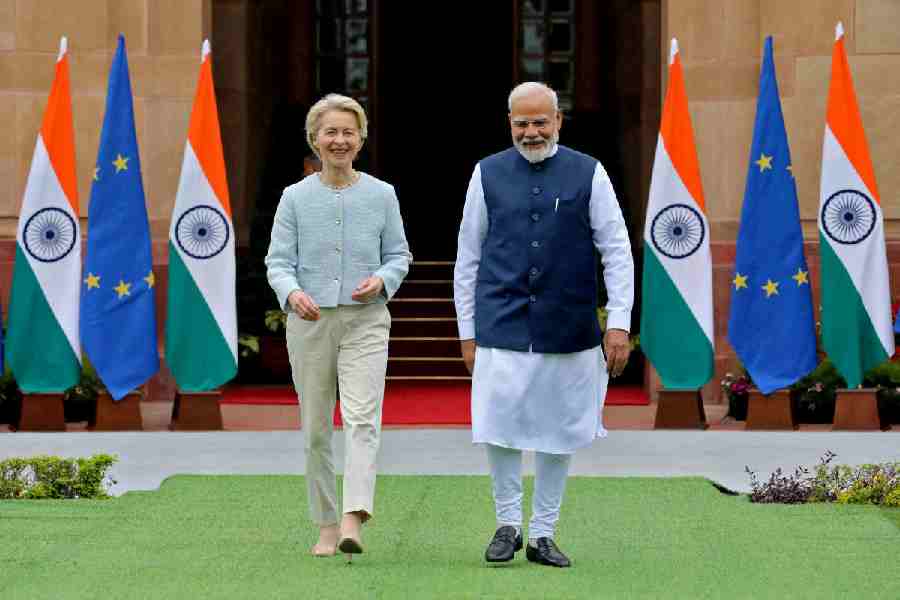
The agreement was formally unveiled today at the India-EU Summit in New Delhi, in the presence of Prime Minister Narendra Modi and European Commission President Ursula von der Leyen, who is currently on an official visit to India.
Described by Commerce Minister Piyush Goyal as the “mother of all trade deals,” the India–EU FTA brings together a combined market of nearly two billion people and accounts for almost 25% of global GDP, making it one of the most significant trade agreements globally.
Under the pact, India will gain preferential and duty-free access to the European market for key labour-intensive sectors such as textiles, chemicals, leather, footwear, gems and jewellery, and electrical machinery, which currently face EU tariffs of around 10%. This is expected to significantly boost Indian exports and improve global competitiveness.
For the European Union, the agreement opens access to one of the world’s fastest-growing major economies, including reductions in India’s high import duties on European automobiles, auto components, wines, spirits, and pharmaceuticals.
The FTA goes beyond trade in goods and services, also strengthening cooperation in energy transition, climate action, security, and strategic sectors. European leaders described the agreement as a “geopolitical stabiliser,” reinforcing a rules-based global trade order.
Negotiations for the deal began in 2007, stalled in 2013, and were revived in 2022. The final text is currently undergoing legal review and is expected to be signed later this year, with implementation likely by early 2027, subject to approvals from India’s Cabinet and the European Parliament.
The agreement is set to reshape India-EU economic relations and unlock a new era of trade, investment, and strategic partnership.