
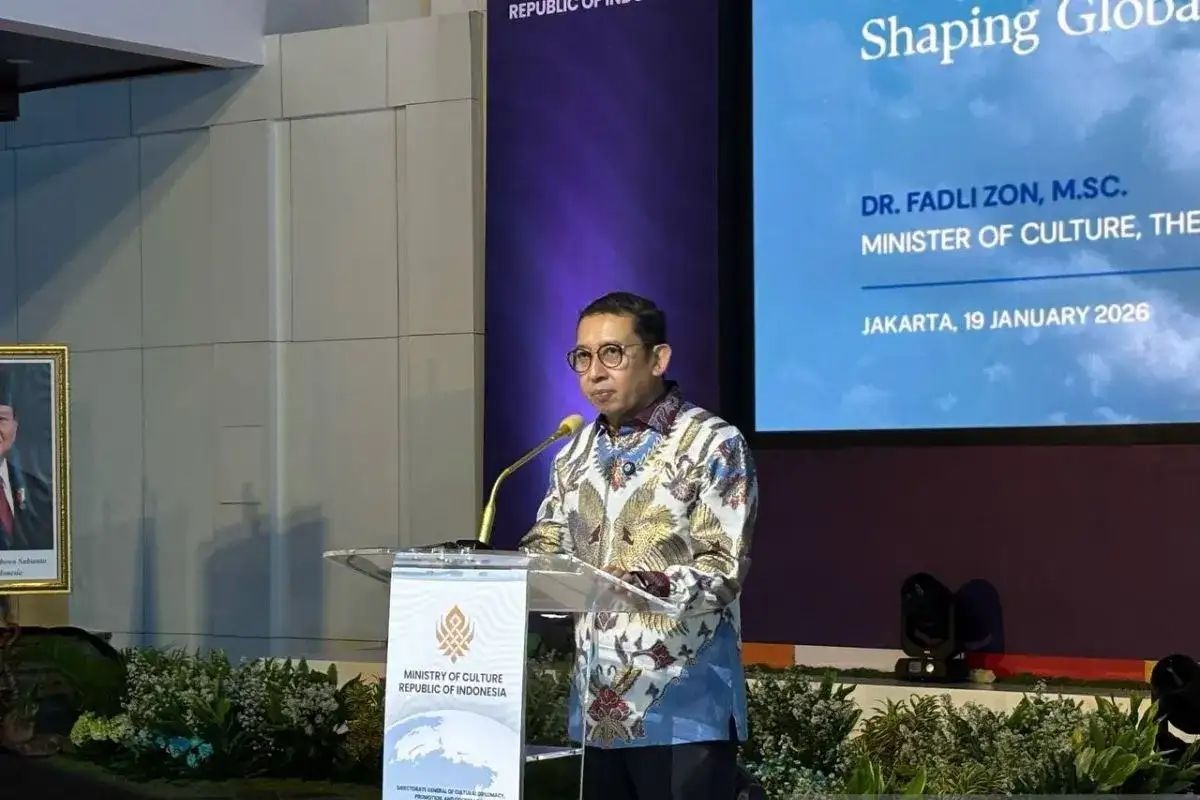
Indonesia is seeking to expand global partnerships through cultural diplomacy as part of its “Indonesian Cultural Outlook 2026,” according to Minister of Culture Fadli Zon. The initiative is designed to foster collaboration with governments and cultural institutions worldwide, positioning culture as a unifying force amid global challenges.
Speaking at the Indonesian Cultural Outlook 2026 event in Jakarta on Monday (January 19), Fadli said the program aligns with Indonesia’s constitutional mandate to promote national culture within global civilization. He emphasized that cultural cooperation can play a vital role in strengthening international relations, even as political dynamics often create divisions.
Citing remarks by UN Secretary-General António Guterres on the current global turmoil, Fadli noted that culture offers a collective pathway to address shared challenges. “While politics may divide, culture has the power to unite,” he said, as quoted by Antara.
The event brought together representatives from around 60 countries, with the aim of encouraging partnerships in cultural industries, particularly in cultural heritage preservation, museum collection development, and human resource capacity-building. According to the minister, such engagements are expected to translate into long-term cooperation and stronger international networks.
Fadli highlighted Indonesia’s vast cultural wealth, describing it as a form of “megadiversity.” The country is home to 313 national cultural heritage sites, six UNESCO-recognized world cultural heritage sites, more than 2,700 intangible cultural heritage elements, over 1,200 preserved cultural assets, and tens of thousands of museums and cultural reserves.
Looking ahead to 2026, the Ministry of Culture will prioritize stronger protection of cultural assets, wider public access, and improved skills for cultural communities and creators. The agenda also includes developing a culture-based economy, enhancing cultural infrastructure, and consolidating Indonesia’s cultural presence on the global stage.
The minister concluded by calling for deeper international collaboration, expressing confidence that shared resources, expertise, and networks can deliver meaningful outcomes.